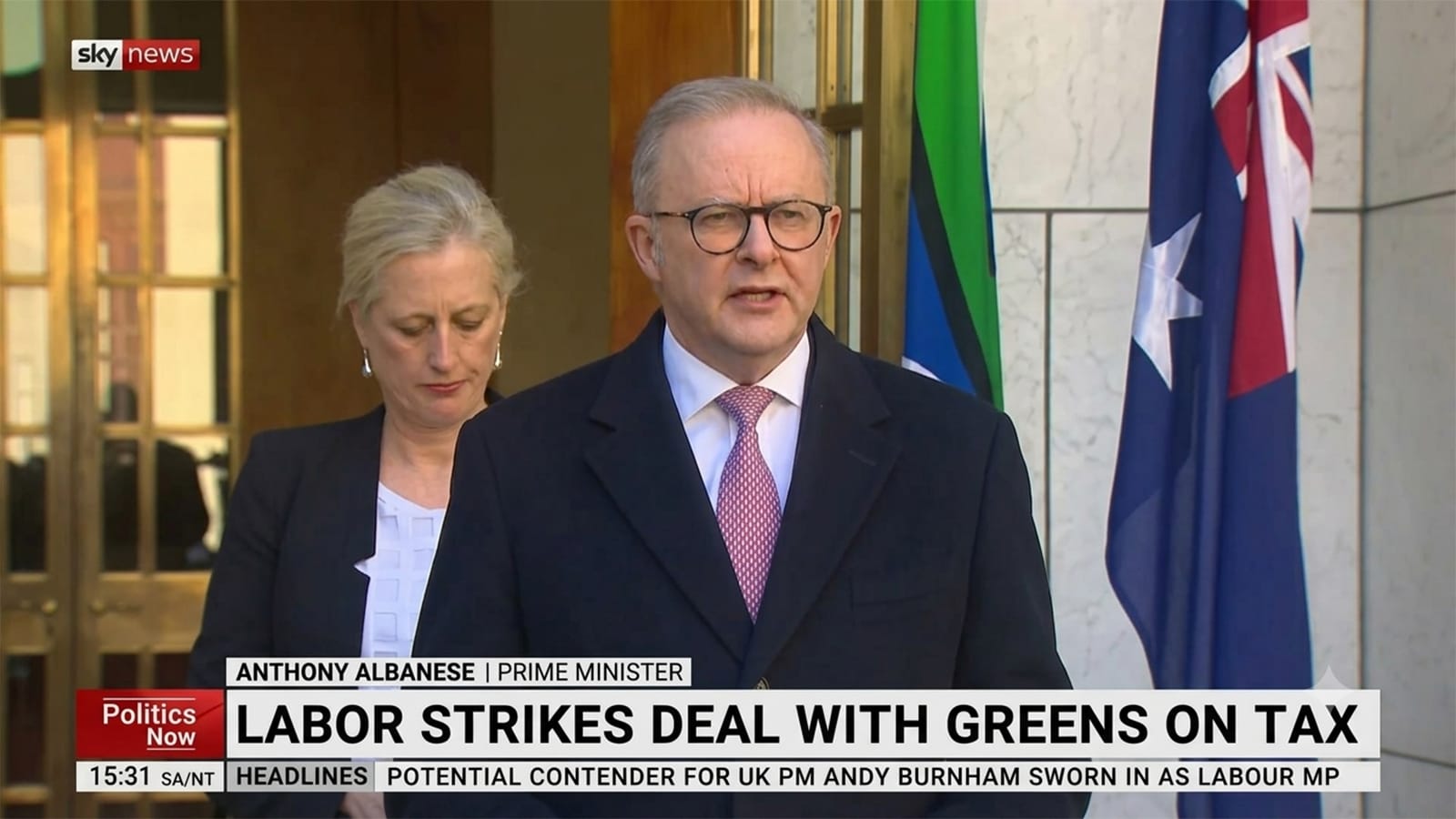
The government has spent weeks reassuring property investors that they're "grandfathered." The message has been simple. The new negative gearing and capital gains tax rules only hit the next buyer, and anyone already holding is safe. The bill is more complicated than that. To keep the full 50% capital gains discount on a property you already own, you have to sell it before 1 July 2027. Hold past that date and the growth from then on is taxed the harder way. And for couples who own together, there is a second catch buried in the explanatory memorandum: the grandfathering can vanish the moment one of them dies, or the two of them separate.
What the government has been promising existing owners
When Labor handed down the changes on budget night, the assurance to anyone already holding property was that nothing would change for them. Keep your negative gearing. Keep the capital gains treatment you bought under. The whole promise rests on a single moment in time: you had to be holding the property before 7.30pm on 12 May 2026.
How the grandfathering actually works, and where it stops
Two different things sit under that promise, and they don't behave the same way.
Negative gearing is the simpler one. If you held the property before budget night, you keep negative gearing on it, whether you hold it or sell it. That part travels with you.
The 50% capital gains tax discount is where the catch begins, and it runs on timing rather than on when you bought. On 1 July 2027 the rules treat your property as if you sold it and bought it back at its market value that day. The gain up to that date keeps the old 50% discount. Any growth after it loses the discount and is taxed the new way, with the cost base indexed for inflation and a minimum rate of 30%.
So the only way to get the full 50% discount on the whole gain is to sell before 1 July 2027. Hold past it, and everything the property earns from then on is taxed the harder way.
What it costs to hold past 1 July 2027
The difference shows up on the numbers. Say you bought a rental for $1,000,000 and sell it for $2,000,000. That $1,000,000 profit is your capital gain, and the tax on it turns on when you sell. These figures assume the top tax rate.
| Sell before 1 July 2027 | Hold past 1 July 2027 | |
|---|---|---|
| CGT discount | Full 50% on the whole gain | 50% only on the gain up to 1 July 2027. Growth after is indexed and taxed at up to 47%, with a 30% floor |
| Tax on a $1m gain | About $235,000 | About $350,000 on $1m of growth after the cut off |
| You keep | Roughly $765,000 | About $650,000 |
| Negative gearing | Kept | Kept, grandfathered while you hold |
Same gain, around $115,000 more in tax, just for holding past the cut off. This is general information, not financial advice. The real figure depends on your income, your cost base, any improvements, and the apportionment method, which the government still hasn't finalised. Anyone in this position should talk to a registered tax agent or financial adviser and run their own numbers.
The line in the bill the press release left out
For couples there is a second catch, and it sits in the fine print. The explanatory memorandum to the Treasury Laws Amendment (Tax Reform No. 1) Bill 2026 sets it out at paragraph 2.35. It deals with a jointly owned property that changes hands after budget night:
"Where one of the two joint tenants ... ceases to have an interest in the property, the remaining owner is treated as having acquired a new ownership interest from the departing joint tenant. This new interest (but not the original interest) is subject to the requirement to quarantine losses."
In plain terms, the moment one owner stops holding their share, the other owner is treated as buying that share fresh, after budget night. A share bought after budget night gets no grandfathering.
Why a death or a divorce sets it off
The bill never uses the words death or divorce. It doesn't need to. An owner "ceases to have an interest" in two everyday situations. When they die and their share passes to the survivor, and when a couple separate and one signs their share over to the other.
The Australian Financial Review reports Treasurer Jim Chalmers has confirmed both. Jointly owned investment properties bought before the budget lose the grandfathered exemptions from the capital gains and negative gearing changes if one of the co owners dies, or they divorce. The provision is in the bill the government is rushing through the Senate.
What it means for a couple who own together
Picture a couple who bought an investment property together in 2015. Both halves are grandfathered today.
If one of them dies, the survivor ends up owning the whole property. Their original half keeps the old negative gearing and capital gains treatment. The half they inherit is treated as bought in the year of the death, stripped of negative gearing and dropped into the new capital gains rules.
A divorce runs the same course. When one partner signs their share over to the other in the settlement, the share that moves is treated as a fresh purchase, and the grandfathering on it is gone.
The detail that never makes a media release
The grandfathering was sold as protection that lasts as long as you hold the property. The bill quietly attaches a condition the government didn't spell out, that nothing in your life changes. A death in the family or the end of a marriage, and part of the promise is gone, on a property a couple may have owned for decades.
For the full picture of the tax deal, what changed and who it really protects, see our coverage of the Albanese Greens tax deal.
This article is general information only and not financial, tax or legal advice. Everyone's circumstances are different, and these rules are complex and not yet final. Before acting, speak to a registered tax agent or a licensed financial adviser about your own situation.